Lauren Meisner is the founder, speaker and consumer-culture strategist who bootstrapped Gen Z media network Centennial World and the host of Mini Scroll, a near-daily podcast about internet culture. This year her team started posting full stories from the show to TikTok. Not highlights or hooks. Entire segments, nine or ten minutes long, with the tangents and flubbed lines left in. Within three days, some had passed 100,000 views.
On paper, that shouldn’t work. TikTok is supposed to be the short platform. Podcasts are supposed to live in podcast apps. But Meisner sees it differently: “Creators are taking control of how they want audiences to consume their content, and it’s making us all more format agnostic.” Then, half joking: “Call me delusional, but I believe this is my impact.”
She isn’t delusional. She’s describing something every brand builder should be paying attention to.
What format agnostic actually means
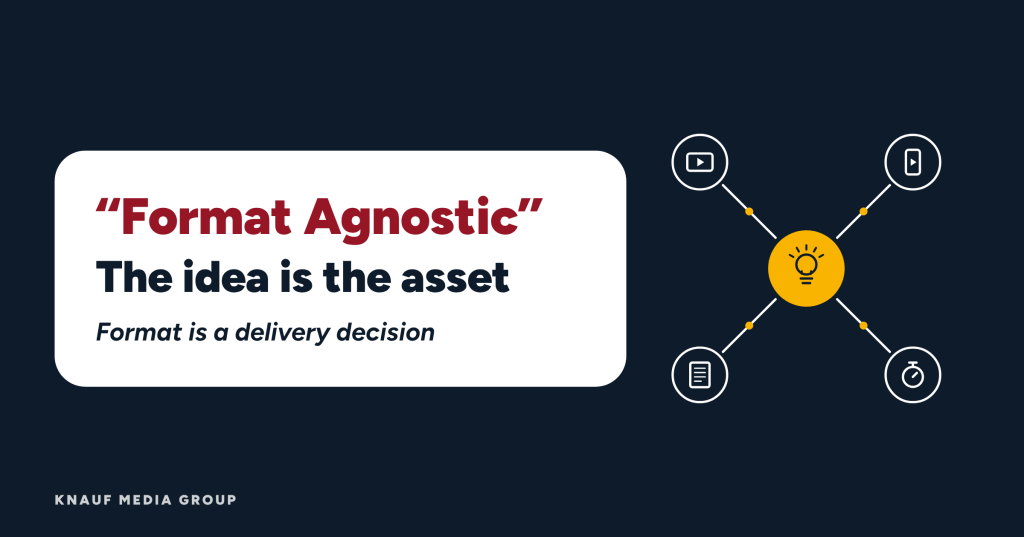
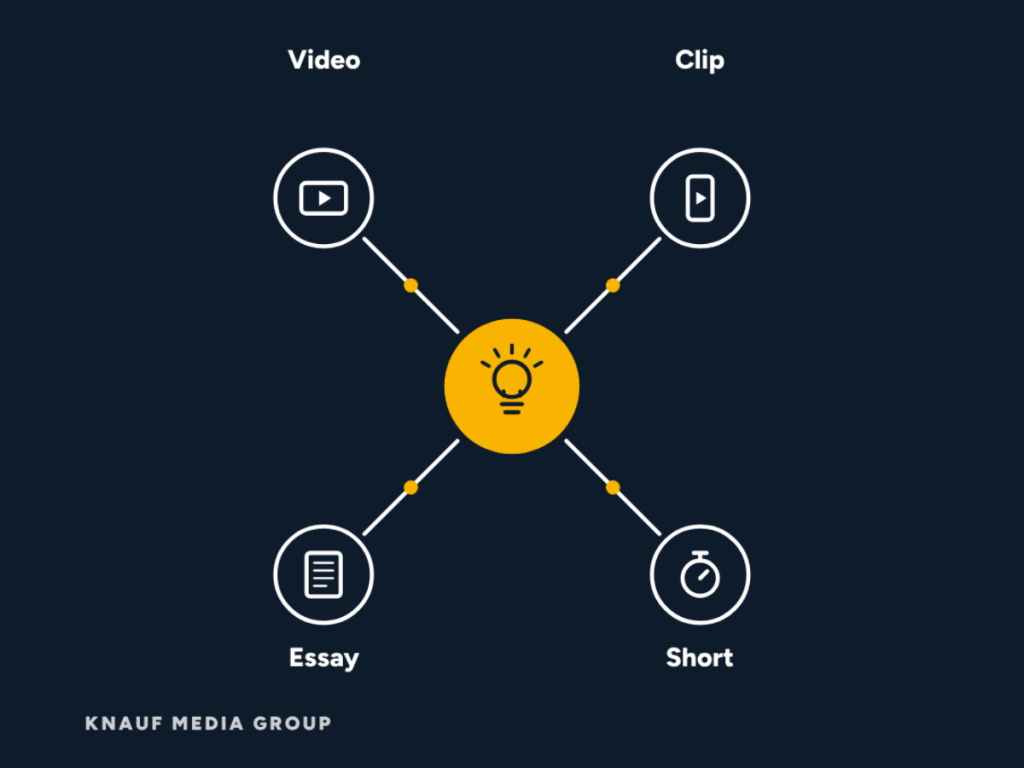
Format-agnostic content starts with a simple premise: the idea is the asset, and format is a delivery decision. The same thinking can show up as a long video, a nine-minute vertical clip, a written essay, or a 30-second Short, and each one can be a complete experience rather than a trailer for the “real” version.
Meisner points to creators who post long talking-head videos on TikTok with a caption that reads, in effect, listen to this like a podcast. That small instruction does something important. It tells the audience how to use the content instead of letting the platform decide. The viewer saves it, puts in AirPods, and listens while doing the dishes. The format bends to the moment, not the other way around.
This is different from repurposing, at least as most teams practice it. Repurposing treats the derivative piece as lesser: a teaser, a cutdown, something to drive traffic back to the main event. Format-agnostic thinking treats every version as a legitimate entry point.
Start with the people your buyers want to hear from
For B2B brands, the strongest source asset is usually already in the building: leadership. Sprout Social’s research shows 48% of LinkedIn members want leadership updates from the brands they follow, and most executives have far more point of view than their marketing ever captures.
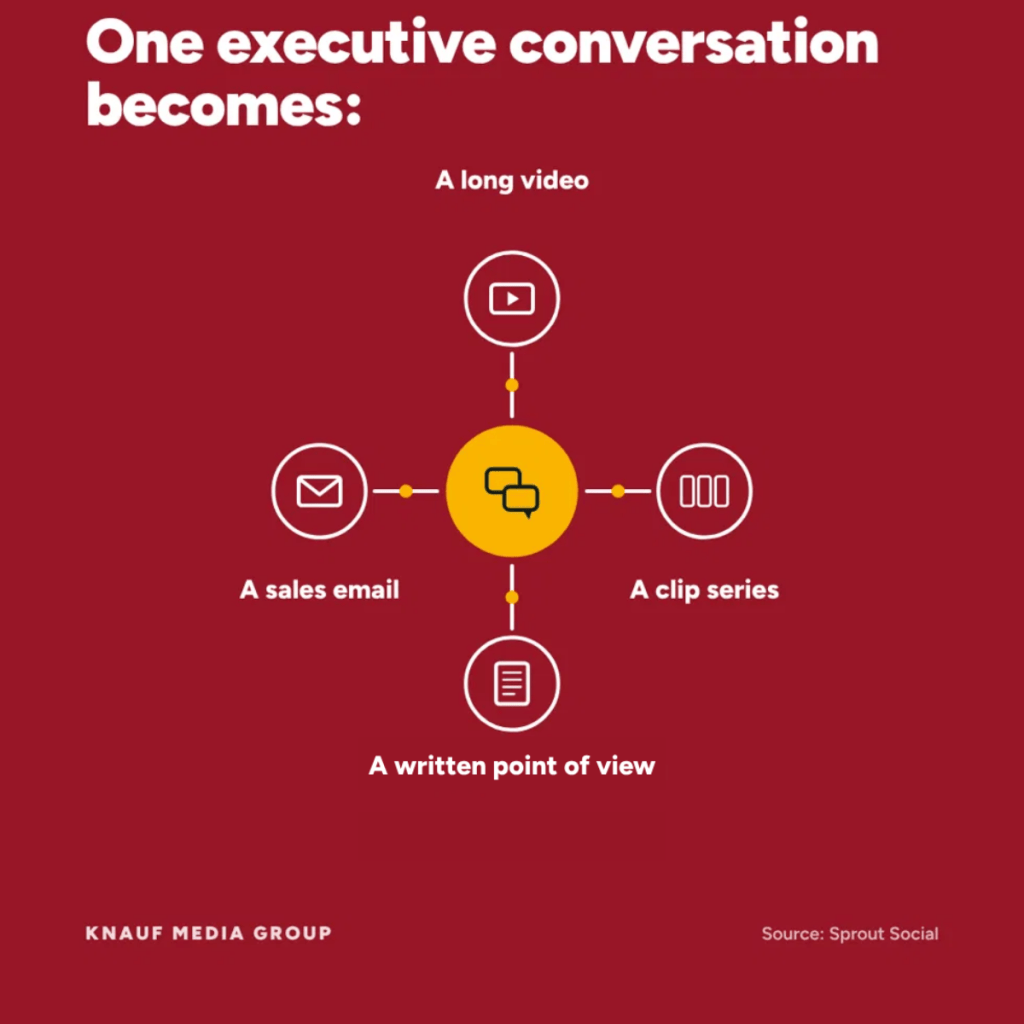
One well-run executive conversation can become a long video, a clip series, a written point of view, and the anchor for a sales email, each mapped to a different stage of the funnel. The executive gives an hour. The brand gets weeks of material that sounds like a person, not a press release.
That’s the format-agnostic model at its most practical, and it’s how we build content programs with the leaders we work with.
This is the shape of the internet now
Gary Vaynerchuk argues that social media effectively ended years ago and was replaced by interest media. Feeds no longer show you what the people you follow posted. They show you what you’re into right now. When distribution follows interest instead of relationships, the container matters less than whether the idea earns attention.
Look at what audiences are doing and the pattern is consistent. Substack passed 35 million monthly active subscribers this year, and the written word is having a cultural moment. Sprout Social’s 2026 Content Strategy Report found audiences interact with YouTube Shorts and long-form video in nearly equal measure. Another Sprout survey found 57% of social users want brands to prioritize original content series.
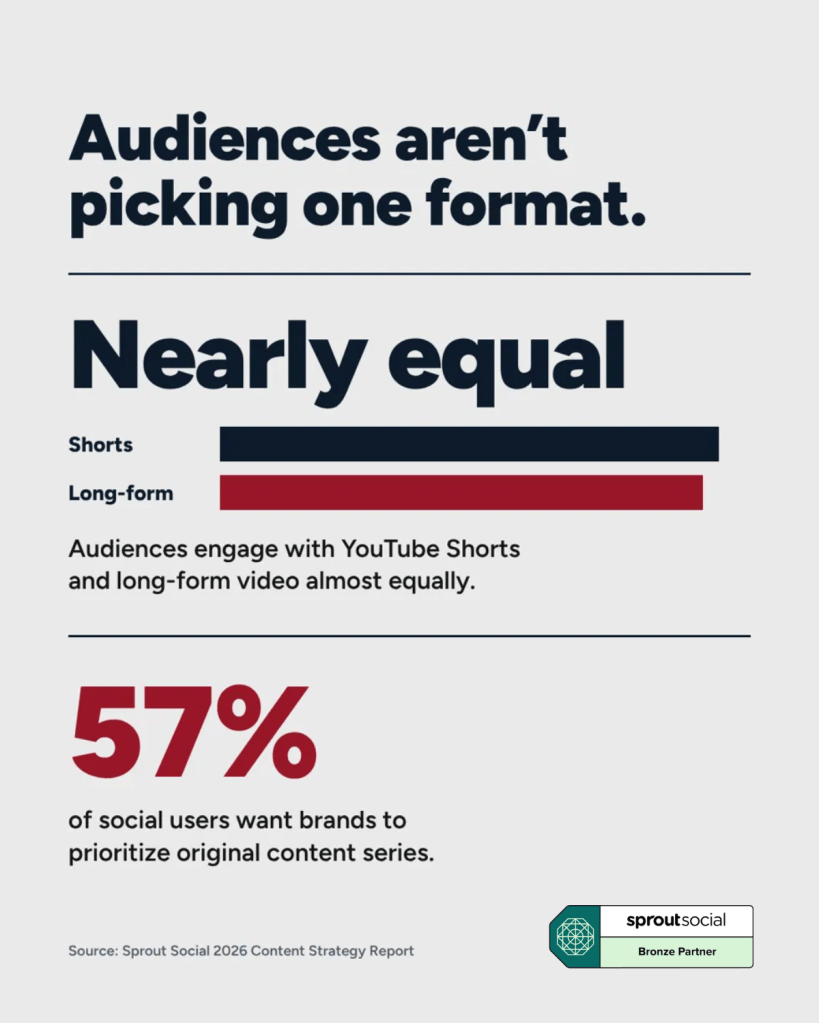
Those findings don’t conflict. They describe one audience moving between modes depending on the hour: scrolling on a break, listening on a commute, reading on a Sunday morning. A brand committed to a single format is only available for one of those moments.
Short for reach, long for trust, one source
The practical case is about goals, not taste. Short-form is a discovery engine. It reaches people who have never heard of you and asks almost nothing of them. Long-form is where trust gets built, because someone who spends 20 minutes with you starts to feel they know you (it’s part of why parasocial relationships are so prevalent right now).
Meisner’s own numbers make this concrete. Roughly 70 to 80 percent of Centennial’s listenership comes through YouTube, not podcast apps. People discover the show as video, clip it for short-form, and then watch the full episode.
For marketing teams, the model is to produce one substantial piece and build outward from it. Sprout recommends publishing the long-form piece first, then releasing related Shorts over the following two to three weeks so the channel always has fresh entry points.
Format agnostic is not point-of-view agnostic
There’s a catch. Meisner is blunt about where the value sits: if your content just delivers the news, AI can do that now. Anyone can get the bullet points from a chatbot. What people follow is the commentary, the opinion, the human reasoning behind it.
That’s the condition format-agnostic content depends on. An idea worth carrying across formats travels well. Slice a webinar with nothing to say into ten pieces, and you get ten pieces of nothing. The strategy multiplies whatever is already there, including its absence.
The real lag is inside the marketing team
The most revealing part of Meisner’s story is about measurement. Australia’s main podcast ranking tool counts audio downloads but excludes YouTube views and Spotify video plays. So some of the country’s biggest shows avoid video, because moving their audience to the format people actually prefer would lower their ranking. Audience behavior moved, and the measurement approach didn’t.
Most marketing organizations have a version of this problem. Budgets are owned by channel. KPIs are set by platform. The content calendar is organized by where things post rather than what they say. In that structure, nobody owns the idea, and nobody can see its full impact.
Meisner’s answer for her own marketplace, SponStudio, is to report “listens,” a combined measure covering downloads, video views, and livestreams. Brand teams need the same shift: measure the total reach and engagement of an idea across all its forms, then evaluate which form did which job.
Before your team’s next piece goes into production, four questions are worth asking. What is the idea? What job does it need to do: reach, trust, or conversion? Which formats serve which job? And how will we measure the idea, not just the post?
The audience already decided how they want to consume content. The brands that win will stop arguing with them about it.


